
Atwater Neighbors and Block Sources
Each Atwater source answers a different block question. GIS can reveal which parcels touch, a deed index can show transfer parties, and a historical directory can place a subscriber at an Atwater address for one publication year. None of these sources is a complete Atwater neighbor directory.
| Source | What It Shows About a Block | Access |
|---|---|---|
| Merced County GIS parcels | Atwater lot geometry, adjacent APNs, jurisdiction, and available map layers | Free map viewer; geometry is not title |
| Assessment Inquiry | Atwater assessment facts, values, exemptions, parcel status, and map categories | Fee parcel number or assessment number; online owner/address search disabled |
| RecorderWorks | Atwater recorded transfer parties, dates, document numbers, and deed-chain clues | Free name index from 1963; legal description confirms the parcel |
| Accela permits | Atwater address, record type, status, applicant, and licensed professional where public | Jurisdiction split; an address record is not proof of residence |
| California voter status | One voter’s registration confirmation and election information | Self-lookup; full files require an authorized purpose |
| Historical street directory | Named Atwater subscriber or householder tied to a dated street section | Museum, library, or NARA route; publication year controls |
Atwater owners, occupants, and household members are not interchangeable. An Atwater mailing address may identify where an owner receives tax mail, while a situs address identifies the parcel. An Atwater permit applicant may be a contractor, and a voter record is controlled by state use rules. These distinctions keep an Atwater neighbor question tied to evidence instead of inference.
Mapping Atwater Neighbors Parcel by Parcel
For an immediate Atwater block, use the county map as a parcel tool rather than drawing a broad radius. An Atwater radius can pull in back lots or parcels that are close on a screen but do not touch the target. The Atwater adjacent-parcel method keeps the question spatial and lets each APN be checked separately.
- Find the target Atwater situs in the Merced County GIS viewer and turn on parcel boundaries and any identify layer available.
- Record the target Atwater APN, jurisdiction, and visible legal or subdivision label before clicking the parcels that touch or front it.
- Repeat the Atwater parcel lookup for each adjoining lot, keeping APNs in a working list instead of copying names from a map popup.
- Compare each Atwater APN with the assessment route and distinguish mailing address from situs address.
- Use an Atwater deed, permit, historical directory, or authorized voter source only for the narrow question that source can answer.
The Atwater result is a block map of land units and possible record trails. For the full named street, switch to the Atwater street directory, which follows the address chain beyond immediately touching parcels.
Atwater APNs, Situs, and Mailing
Merced County’s Atwater Assessment Inquiry requires a fee parcel number or assessment number. Its documented online categories include Atwater parcel status, tax-rate-area code, assessed values, exemptions, parcel characteristics, and assessment maps. The county expressly disables online search by owner name and street address. That limitation matters when an Atwater block lookup is tempted to turn a ZIP or street into a public list.
The Atwater Tax Collector’s address guidance supplies a practical normalization step. If a full Atwater address fails, try the house number, then the number with a directional, then the number with the directional and street name. Omit suffix words such as Street, Road, Drive, or Lane when the county instructions call for it. Use the resulting Atwater parcel clue, then verify the APN in the assessment or GIS system.
An Atwater mailing address that differs from the situs can locate an owner’s correspondence without showing who occupies the parcel. Atwater household members and other occupants may never appear in the ownership record. DMV address information, utility accounts, and delivery records are not open Atwater block-directory fields.
Atwater Permit Records Near Neighbors
Accela can be useful when an Atwater neighbor question is really about a building project, parcel record, license, or code case. Its Atwater address search includes a street-number range, a street-name wildcard, unit refinements, and optional City, State, and Zip fields. It can expose an address, record type, status, applicant, or professional when that field is public. The Atwater system is not designed to produce an occupant list.
| Accela field | Block-level use |
|---|---|
| Street Number from/to | Approximate a run of Atwater addresses without claiming the result is a block census. |
| Street Name | Use a starting-letter percent wildcard such as M% when the portal accepts it. |
| Direction and street type | Refine a street label with dropdown values and suffix choices. |
| Unit type and unit number | Narrow a multi-unit address where the portal offers those fields. |
| City, State, and Zip | Separate Atwater postal searches from Merced County records in other jurisdictions. |
Check the Atwater city line or sphere map before routing a permit. Work inside Atwater goes to Community Development or a city request route; unincorporated work uses Merced County Accela. An Atwater applicant’s name can explain a project record without proving that the applicant lived next door.
Historical Atwater Households in Street Sections
Atwater historical households are snapshots, not a current roster. NARA’s inventory lists Merced-Madera directories including Atwater for 1914, 1917, 1920, 1922, 1926-1931, and 1935. The Courthouse Museum verifies additional local runs, including Merced City volumes from 1914, 1928-31, 1935, 1938, 1941, 1963, and 1966, plus Merced-Atwater volumes from 1971, 1972, 1980, 1988, and 1989.
Read the Atwater street section after finding a name in the alphabetical pages. Capture the printed address, spouse or widow notation, occupation, telephone, rural route or box, and any cross-reference. An Atwater telephone book fills some gaps but normally lists a subscriber, not every adult. The museum and Merced library can also point to newspapers, maps, yearbooks, photographs, and other local-history holdings.
No open authoritative digitized Atwater volume supplied a named Atwater entry for inspection during the research. That gap is useful to state plainly. It means the Atwater publication year, archive location, and printed field must be verified at the shelf or reference desk before a historical neighbor is described.
California Voter Files and Atwater Neighbors
California’s Atwater voter-status question confirms the registration of the person who is using it. It asks identity fields such as first name, last name, date of birth, and a conditional driver-license, state-ID, or Social Security suffix. The result can include registration status, party preference, polling or vote-center information, districts, election material status, and vote-by-mail information. It does not reveal ballot choices and does not browse an Atwater street.
Merced County Elections is the Atwater file custodian. A qualified voter-file applicant must state an election, scholarly, journalistic, political, or governmental purpose, describe safeguards, sign the use terms, and select a statewide, county, or limited named-voter file. The research lists a $100 statewide file, $30 for a specific voter with a $100 maximum and ten-voter limit, and a 7 to 14 business-day review period. County extracts have county-set fees.
Released fields can include name, birth date, registration date, Atwater residence and mailing address, precinct, contact data, and party preference when the approved file permits them. The law withholds driver-license data, Social Security suffix, unique identifier, signature, protected registrations, and preregistration records. Knowing unauthorized use or acquisition can bring criminal consequences. The Atwater voter tool is therefore not a general block directory.
Atwater Geography Layers Around the Block
The 95301 delivery area crosses Atwater’s incorporated boundary into surrounding unincorporated Merced County territory. The Atwater sphere of influence reaches beyond the current city line. Atwater school districts, tax-rate areas, council districts, ZIP delivery areas, and parcel boundaries add still more layers. A nearby address can share a postal label with Atwater while using a county permit custodian.
Use the Atwater city maps for sphere, zoning, transportation, redevelopment, and general-plan context. Use Atwater GIS for the parcel geometry and the Atwater assessment route for the APN-based facts. Do not infer an association, school connection, or tax district from a subdivision name alone.
No official Atwater neighborhood-association or member-directory page was located in the research. Atwater neighborhood groups, churches, clubs, block programs, and private association lists are not interchangeable with a resident roster. An Atwater private membership list should stay with its organization.
Privacy Routes for Atwater Neighbors
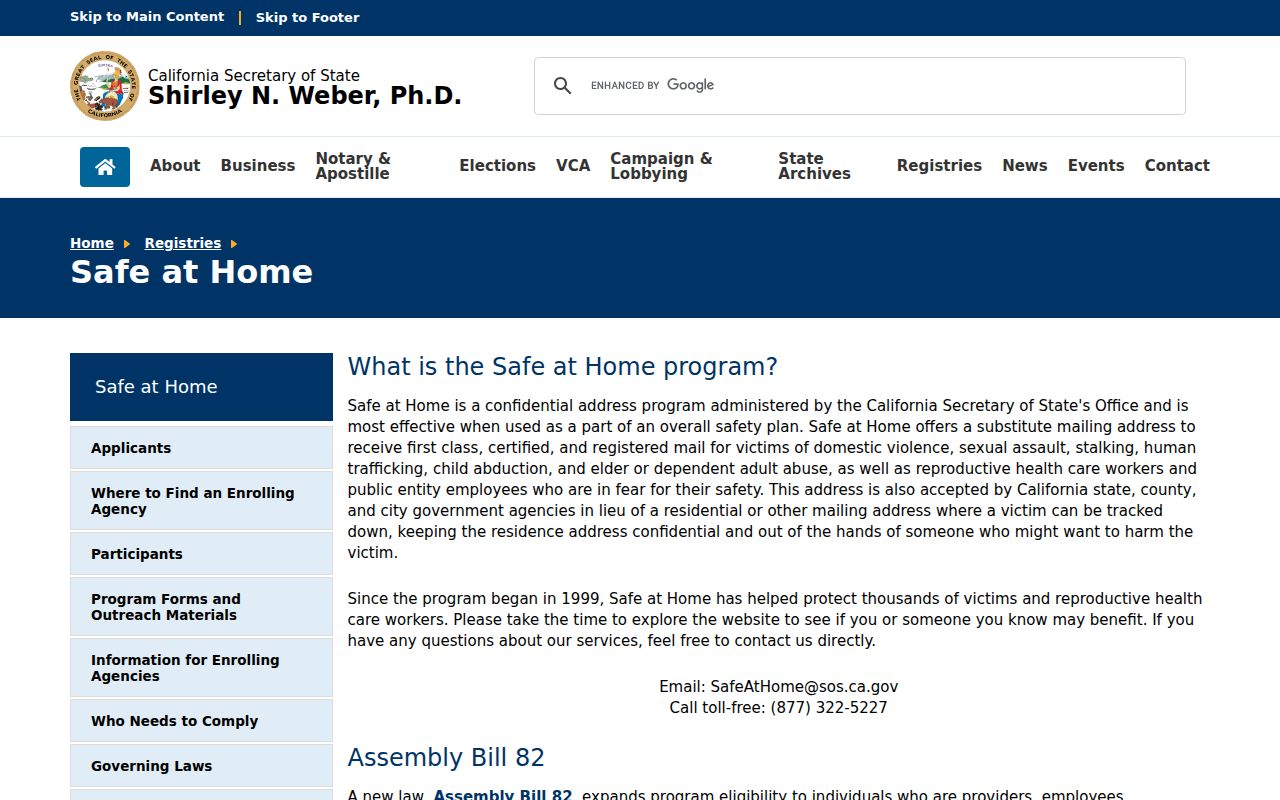
Some Atwater absences are protections, not search failures. Other occupants, household members, utility customers, and people using a protected address may not appear in ownership or public map records. California Safe at Home gives eligible survivors and certain public-facing workers a substitute mailing address and mail-forwarding service. It does not change a person’s identity or physical location, and a private custodian must not casually defeat the protection.
The California Safe at Home program uses an enrolling agency rather than a direct self-file web form. Certification is generally four years and renewable. The program can protect an Atwater public mailing address, but it does not turn an Atwater parcel into an anonymous legal description or make every record disappear.
The Safe at Home capture shows the official confidentiality route. It is a protection resource, not an Atwater neighbor search.
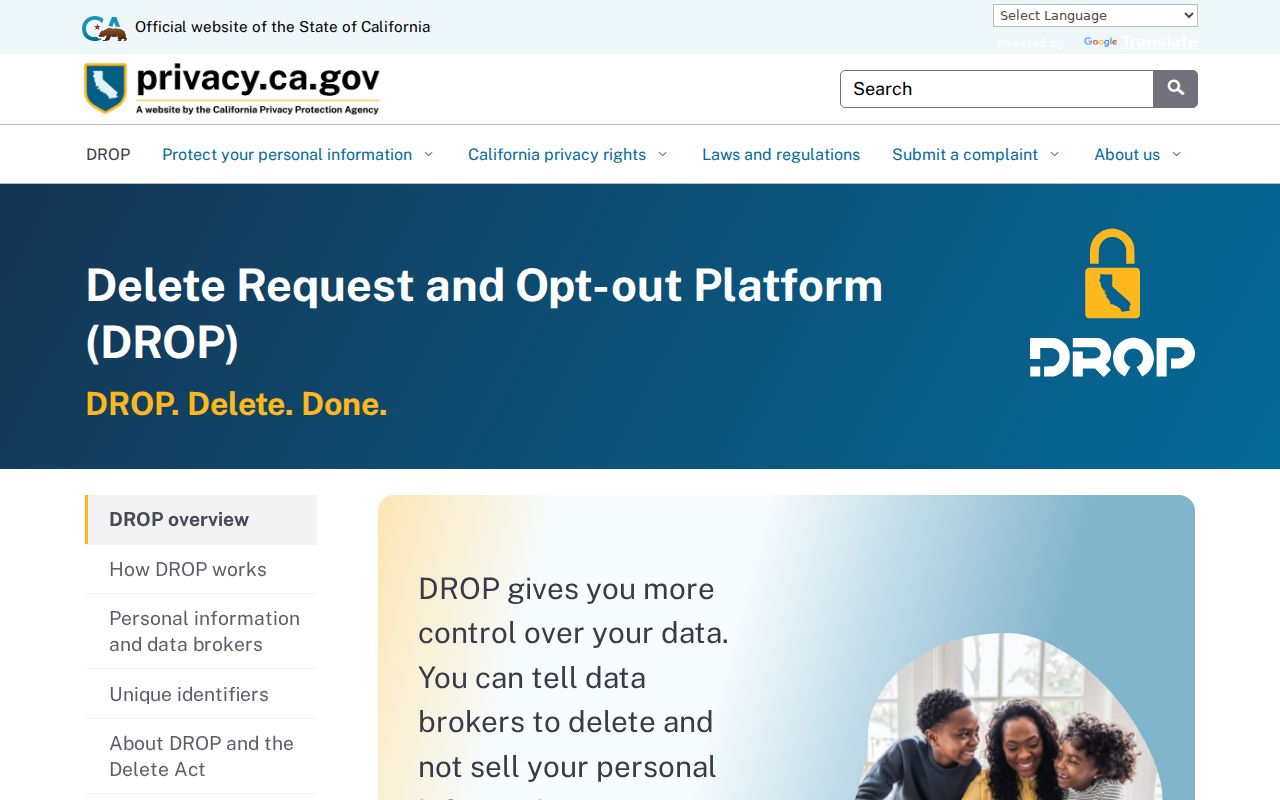
California’s DROP service is different: a verified Atwater resident can submit one free request to registered data brokers to delete and stop selling broker-held data. Broker processing began August 1, 2026, with repeat cycles described by the state. DROP does not delete source deeds, court records, or parcel maps.
The DROP capture illustrates a commercial-data deletion route. Neither DROP nor Safe at Home is a general Atwater block directory, and neither should be used to infer that a missing name or address means a person is absent.
When the Atwater public trail ends, stop at the limit. A lawful block lookup can support local awareness, family reconnection, or Atwater parcel research without exposing protected household details.
Official Records for Atwater Neighbors
Some official tools sit near an Atwater neighbor question without answering it. Custody, corrections, and registry systems carry their own eligibility rules and safety warnings. They should never be presented as an Atwater directory of people living around an address.
| Source type | What it can answer | What it cannot establish |
|---|---|---|
| Atwater parcel and county deed records | Land geometry, recorded parties, and transfer history | Every occupant or household member |
| Atwater permit and code records | A project, record status, applicant, or responsible professional | That a named person lived at the address |
| Atwater custody and registry tools | A defined custody or registry result under that program’s rules | A complete or current list of people near an address |
| Commercial neighbor-search category | Possible compiled clues with uneven freshness | Official, complete, or certified proof |
The CDCR CIRIS locator is a state incarcerated-person search. Its fields can return a name, age, CDCR number, location, admission information, commitment county, and a parole-eligible month or year. The official capture shows that form, not a map of people near an Atwater parcel or Atwater street.
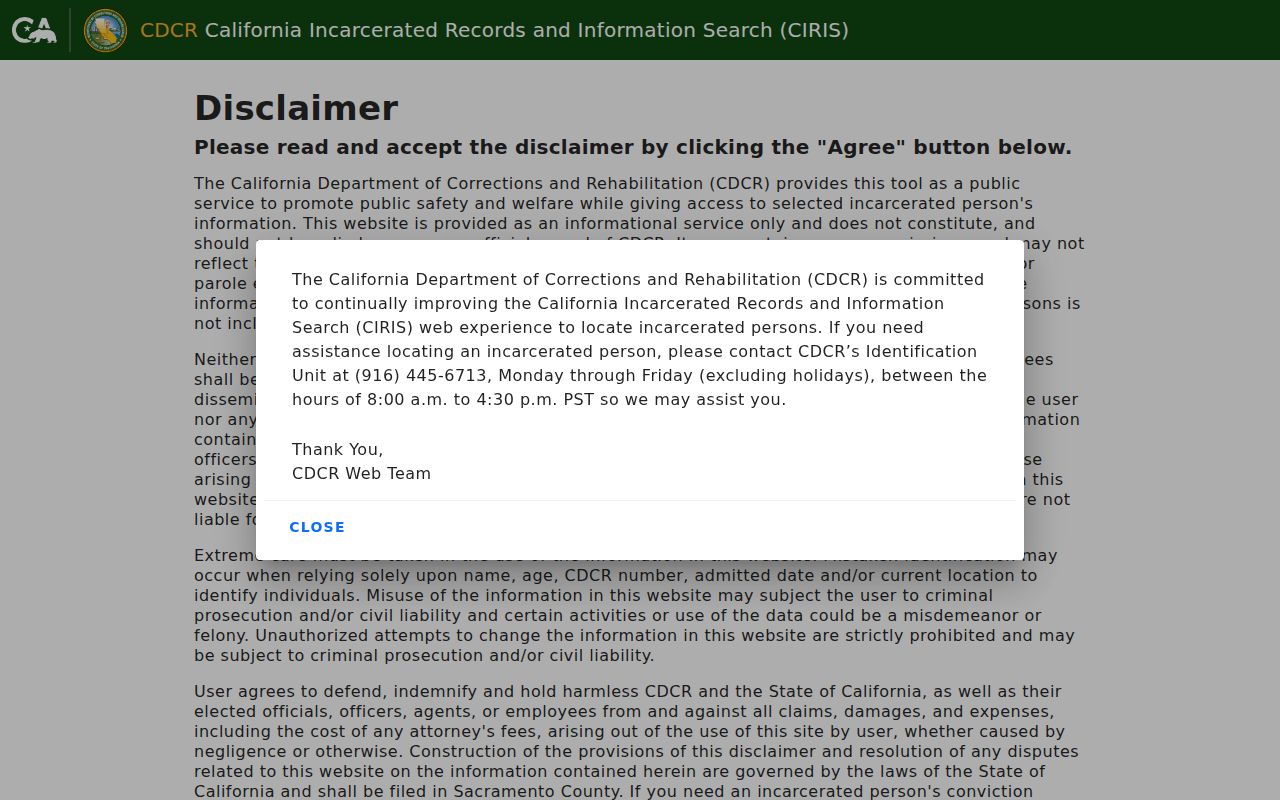
An Atwater CIRIS result concerns the state custody system and carries its own informational limits. It does not prove that the person lived in Atwater or near the searched parcel.
The California Megan’s Law registry requires acceptance of a statutory disclaimer and offers name, map, or radius functions subject to disclosure rules. The research warns that some registrants are excluded, data can change, and an Atwater name, age, or address alone is not enough for identification.
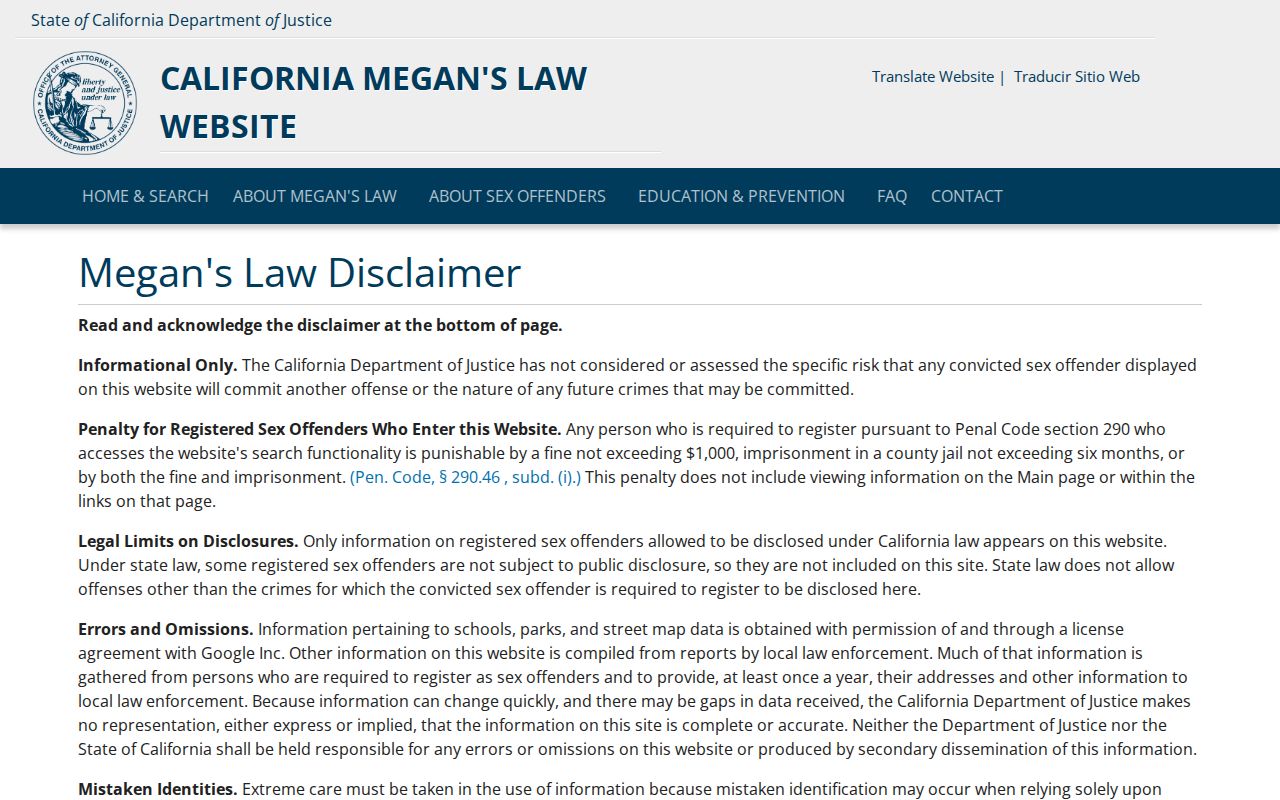
The Megan’s Law capture is an Atwater registry warning and search interface, not a complete list of nearby people. Harassment or criminal misuse is prohibited.
Merced Sheriff has no verified public web roster. Its official custody inquiry guidance directs callers to 209-385-7410. That channel can address current Atwater custody questions, but it is not an Atwater block lookup, and an arrest is not a finding of guilt.
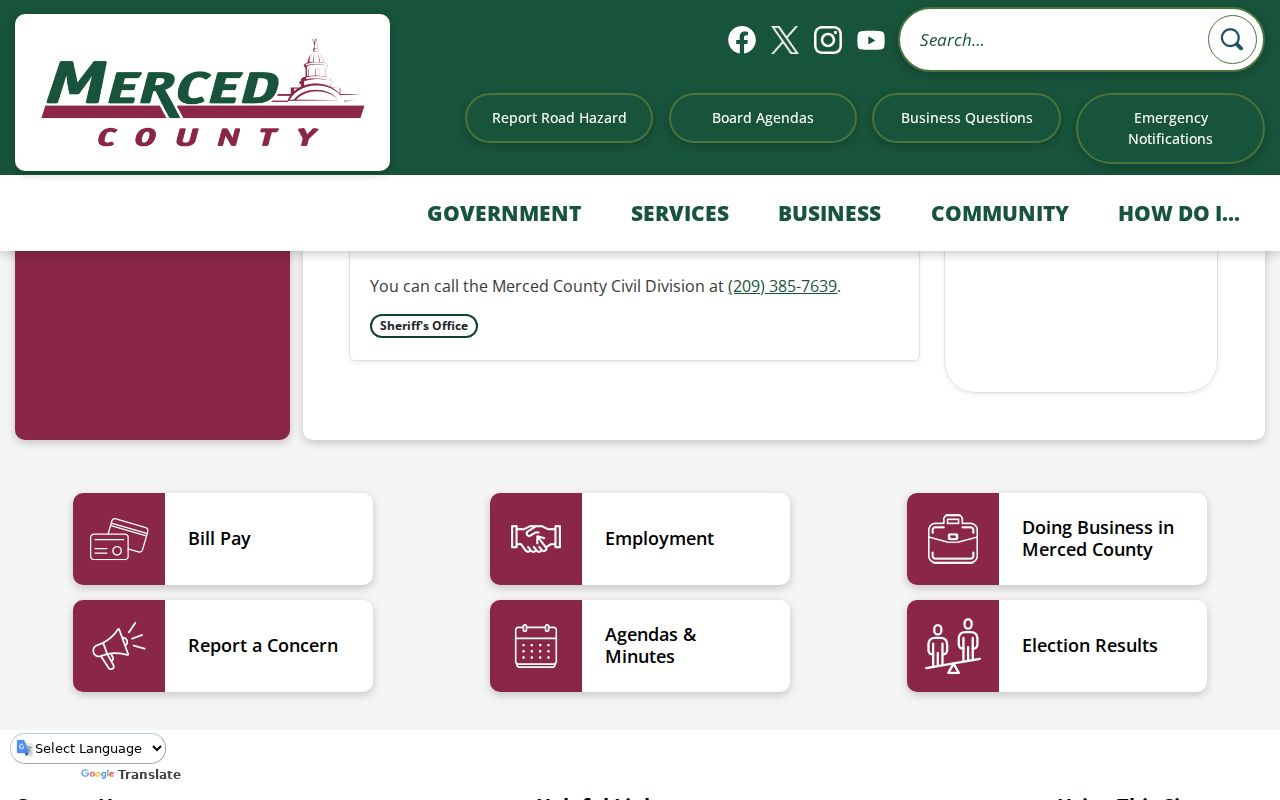
The Sheriff capture reinforces the boundary between a custody inquiry and an Atwater neighbor record. Use the official phone route for its stated purpose and do not republish personal data beyond the narrow lawful need.
Lawful use. Public parcel and registry information may support personal safety, family history, or civic research, but never stalking, unwanted contact, intimidation, or harassment.